Afterdays Media focuses on archaeological views of our contemporary culture. Artifacts, art, or cultural phenomena that picture us in the past tense.

Saturday, July 14, 2012

Stuck Ease


Back in 2010, Chris Naffziger’s excellent blog, St. Louis Patina, featured a post about an abandoned Stuckeys restaurant / candy store in central Illinois. That post received an interesting chain of Flickr photo-responses as well.

I just stumbled across Chris’s post, and was glad to see it, as I have always found these strange places the architectural equivalents of the 1970s zombie – and good photos of their remnants are hard to find.

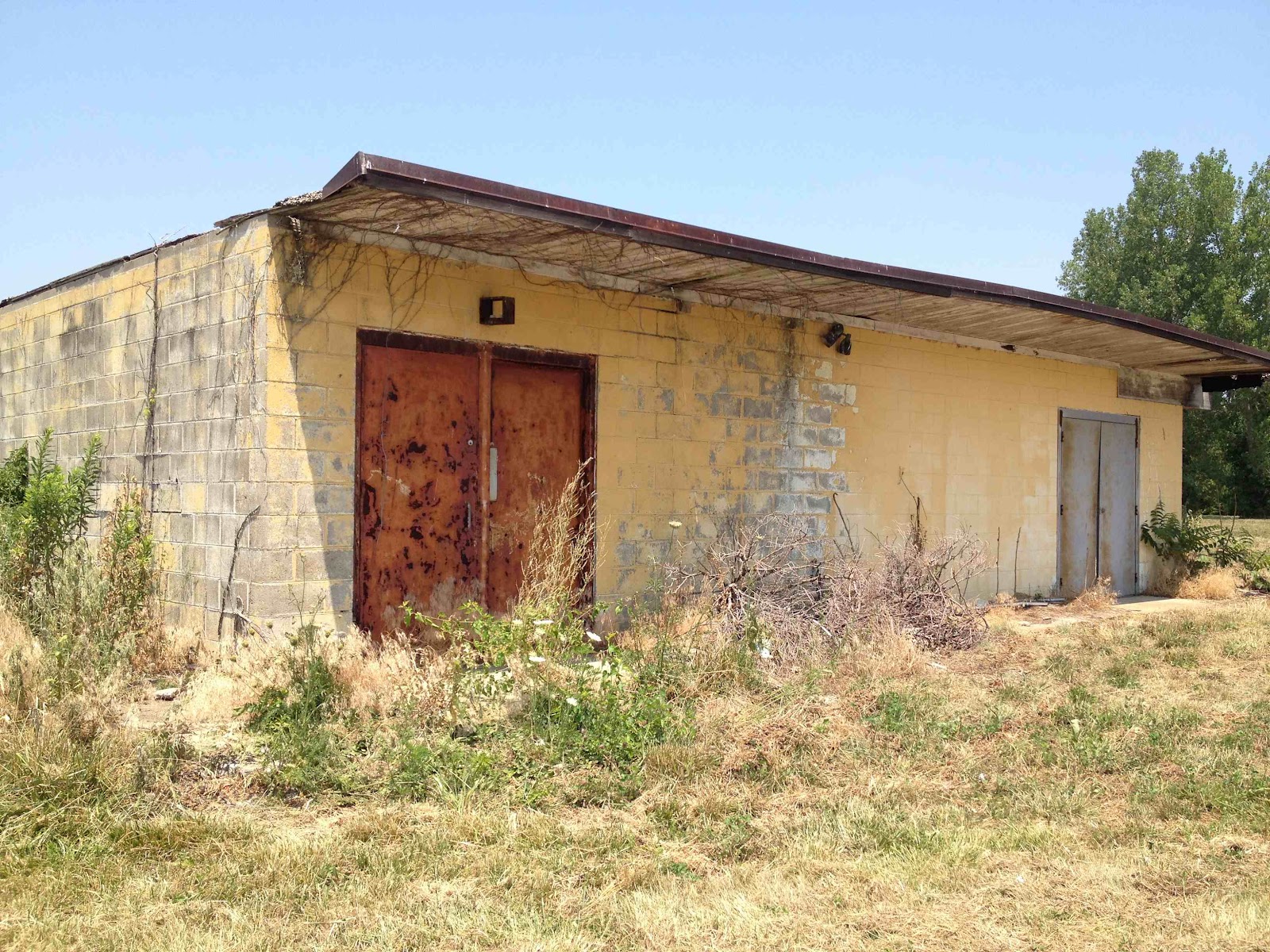
The new Afterdays book release, Zombie 1979: Life at the Dawn of the Dead  features a similar dead Stuckeys (also from central Illinois) that was photographed in 1983. That weird corpse (which lost is trademark chlorine-blue paint to a coat of red years ago) is still standing, but not for long.

Empty, 1983
Still empty, 2011

Monday, July 9, 2012

The Slow Creep into Empty Places, 1990-2010.

Southwestern Freight Depot in 1989

Few folks noticed the massive St. Louis Southwestern Railway Freight Depot building back in 1989, when we shot this photo. The impressively vast structure, cast in concrete, is still one of the most distinctive buildings in St. Louis. The five-story depot was built in 1911 and is 750 feet long. It has been abandoned for decades.

During the 1980s, when we began visiting such places, “urban exploration” was still a pretty obscure endeavor. Most folks weren’t armed with video cameras, and in the case of the Southwestern Depot building, spray paint tagging hadn’t yet arrived to this part of St. Louis. Now it has, and the interiors of the building are a virtual gallery of graffiti art. But I must confess that I find the tagging on the exterior rather depressing. Empty places can be more than playgrounds. This building still has such dignity and grace, and I’m not ready to see it treated like an urban corpse.


The Depot in 2010


The Depot was placed on the National Register in 2004. Read the nomination form HERE.

The building is even impressive from above....


Saturday, July 7, 2012

The Abandoned Globe, St. Louis

The Globe building is situated only yards away from the elevated I-64 downtown.

In the spring of 2009, we spent several days documenting and making collections from the nearly abandoned Globe Drug Warehouse – a six-story building constructed for the Endicott-Johnson shoe company in 1915. The images and artifacts were processed, manipulated, and reassembled into an exhibit at the Duane Reed Gallery (St. Louis) in February of 2010.

The massive warehouse was a virtual preserve of patina and layering of past activity. Some corners were surprisingly intimate, and seemed like little time capsules from the 1960s and 70s.

Below are a few images from the warehouse, as well as link to a video-collage of the space. I will post more images, as well as some of the artwork from the show, in upcoming posts.


An office space largely untouched since the 1970s. 

Shoe company employee graffiti. 


Click on the second effort to watch the video....


Monday, July 2, 2012

Why Abandonment ? Part 1


There is a lot of coverage of abandoned places in the various Afterdays Media projects - the blog, the videos, the music, the new book, etc. The point to all of this is not about emptiness itself, but what vacancy and decay can say about our own culture and its environments. Little perspectives that generally cannot be had while such places are still alive.


Here are a few examples that basically speak for themselves. Irony, fragility, false promise, rapid extinction, inadvertent beauty, etc. More from the mildewing Afterdays Archive soon....


Sunday, July 1, 2012

New Book Release: Zombie 1979


Several years in the making, Afterdays Media is proud to announce the release of our first book publication.

Zombie 1979: Life at the Dawn of the Dead is a cultural history of the early years of the now oh-so-familiar pop-culture zombie phenomena. Back in the day, in the weird years at the end of the Cold War, zombies weren’t nearly so hip. They were an obscure, acquired taste – consumed at the local drive-in, on very expensive VHS tapes, or in hard-to-find fantasy movie magazines.


This full color, heavily-illustrated volume combines personal narrative, film history, and cultural commentary, and is strewn with vintage images of abandoned places and homemade corpses. This is where the walking dead-thing began, in all of its corn-syrup-bloodied and mildewed concession stand glory.

So, if you have even a passing interest in the American zombie, dead malls, old drive-ins, fake corpses, or the homemade Super 8mm apocalypse, have a look at this one. An archaeology of a strange time in American history. Available at Amazon, Barnes and Noble, and other on-line retailers.


Saturday, June 30, 2012

Springfield Drive-In: A Study in Slow Decay

The Springfield Drive-In was the first outdoor theater to open in that Midwestern city – sometime during the early 1950s, I believe. It closed during the early 1980s, after 30 years of intermission jingles and dubious picture and sound quality. The first image is of the concession stand as it was about five years into its abandonment – around 1988. 


As it turns out, the building is still standing. So below are two more shots of this ghost of cheap Midwestern entertainment, retrofitted for commercial storage years ago.


Friday, June 29, 2012

Dead Places, Kept Clean

When they mow these dead places, what remains there looks like art or historical preservation. Lovely.